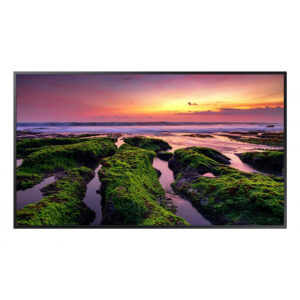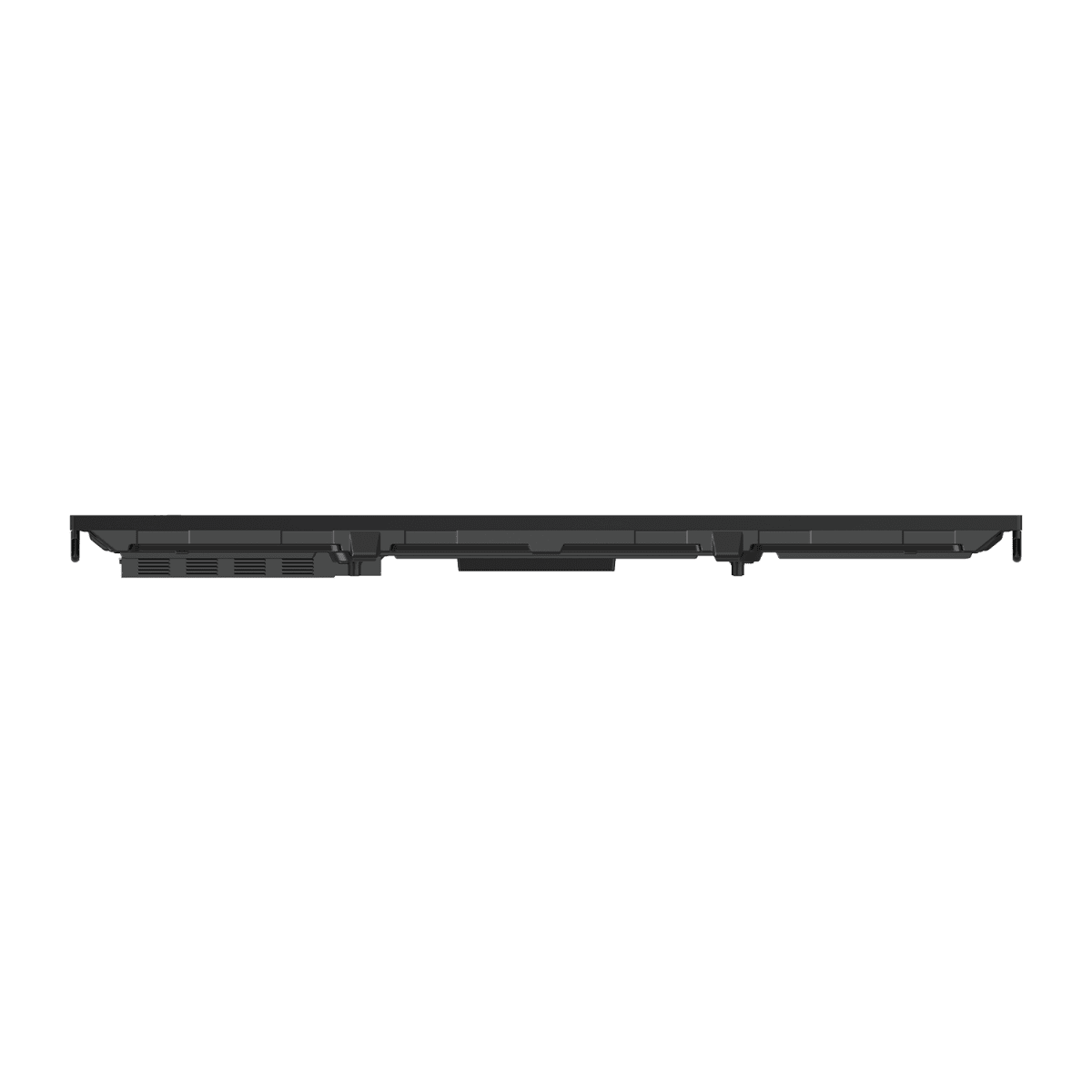
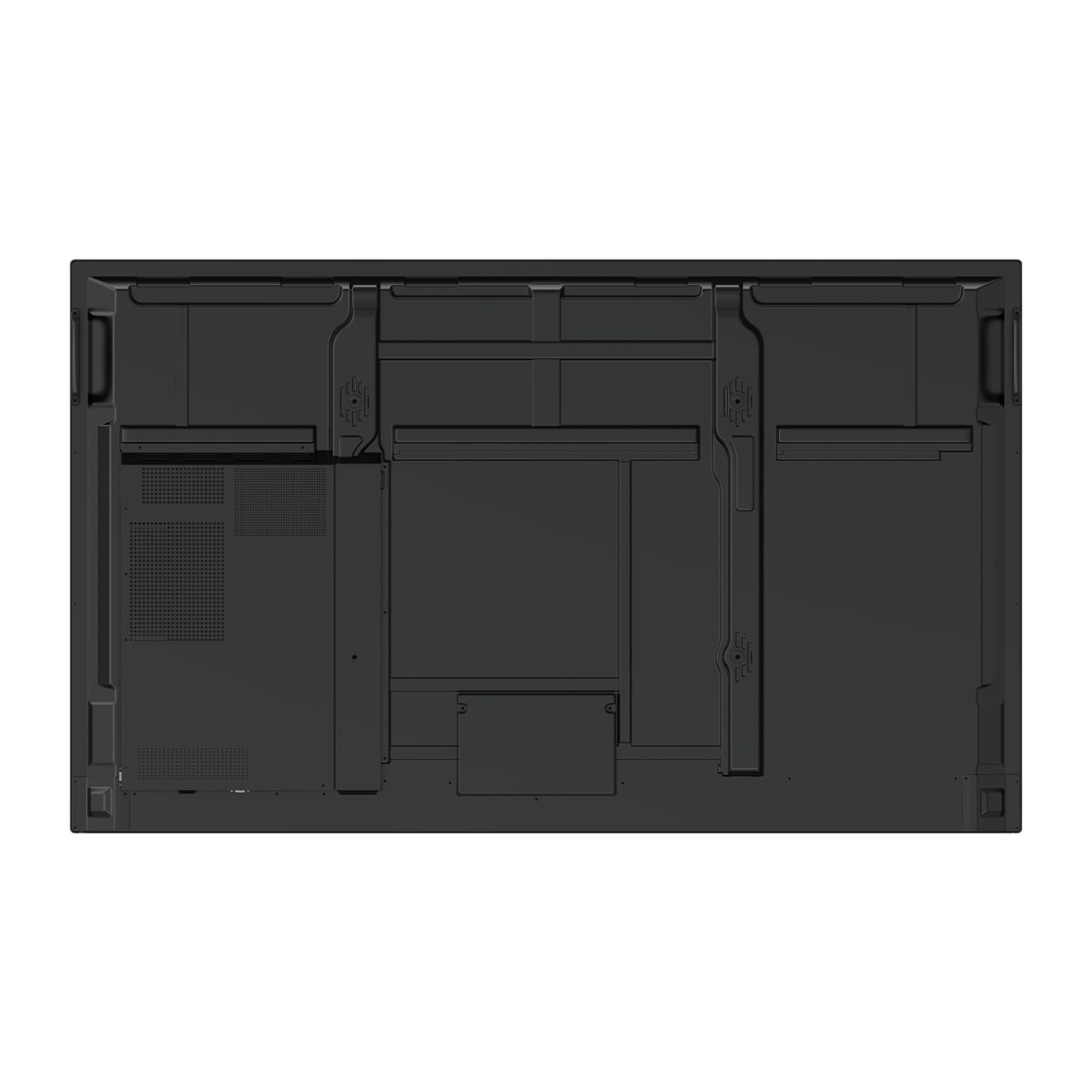

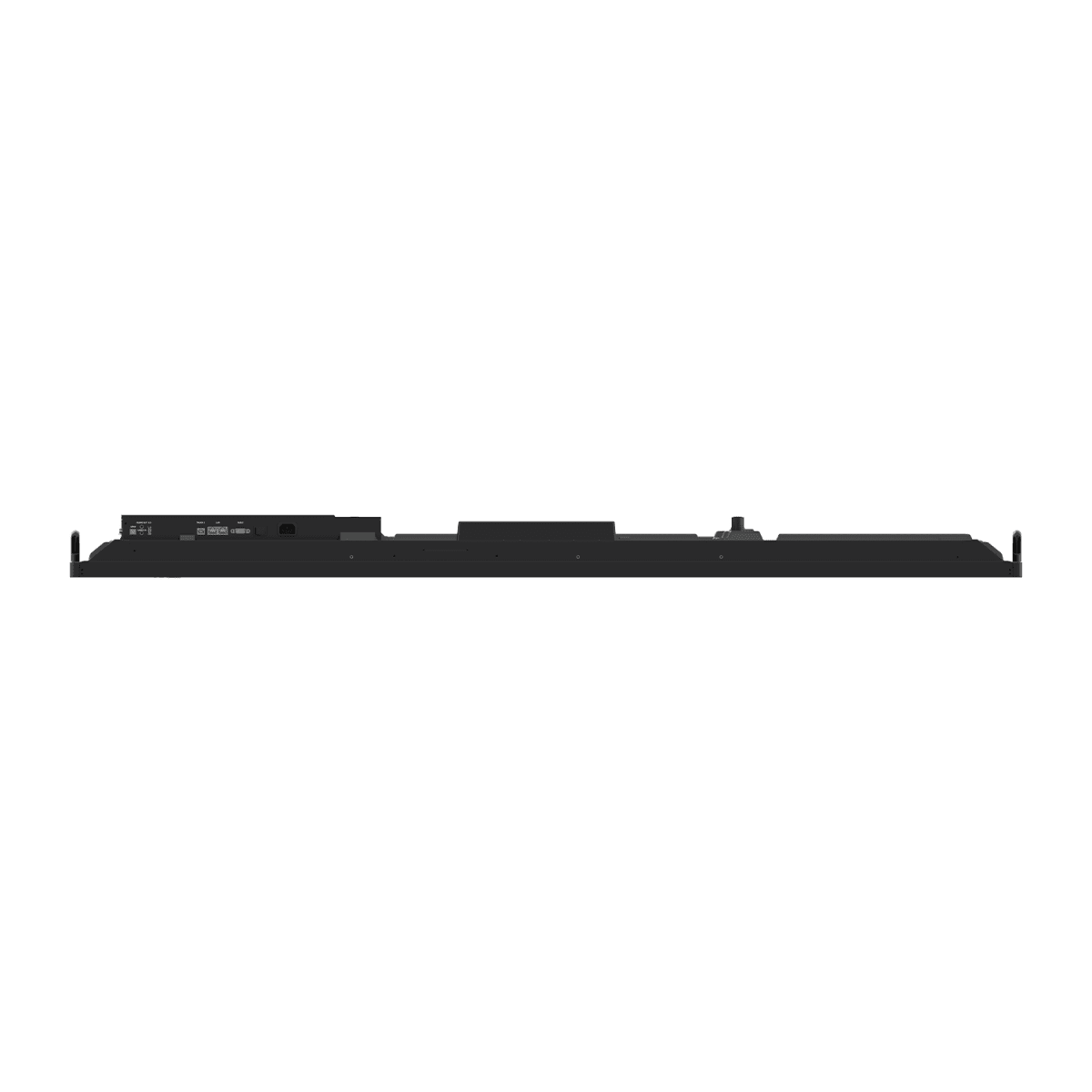
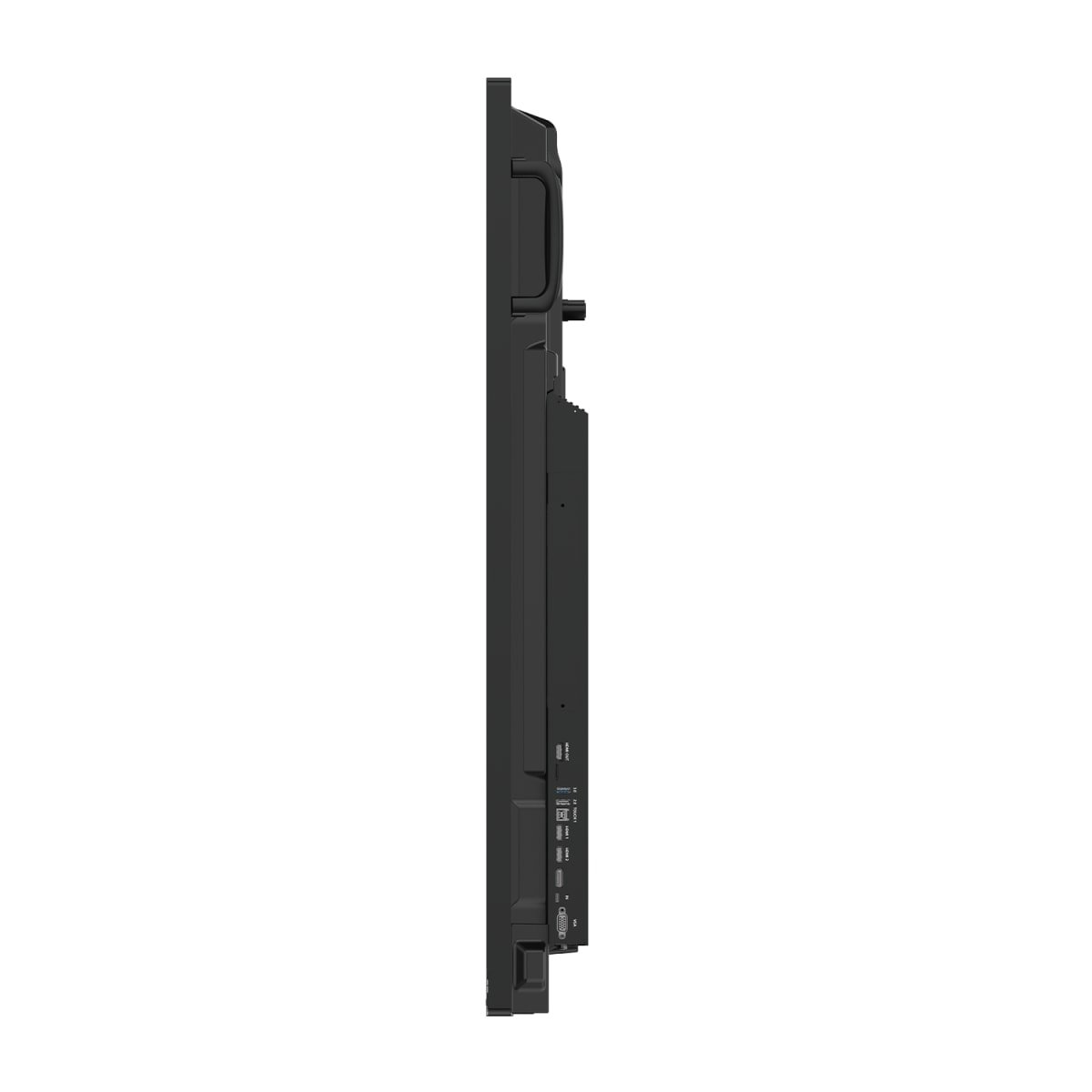
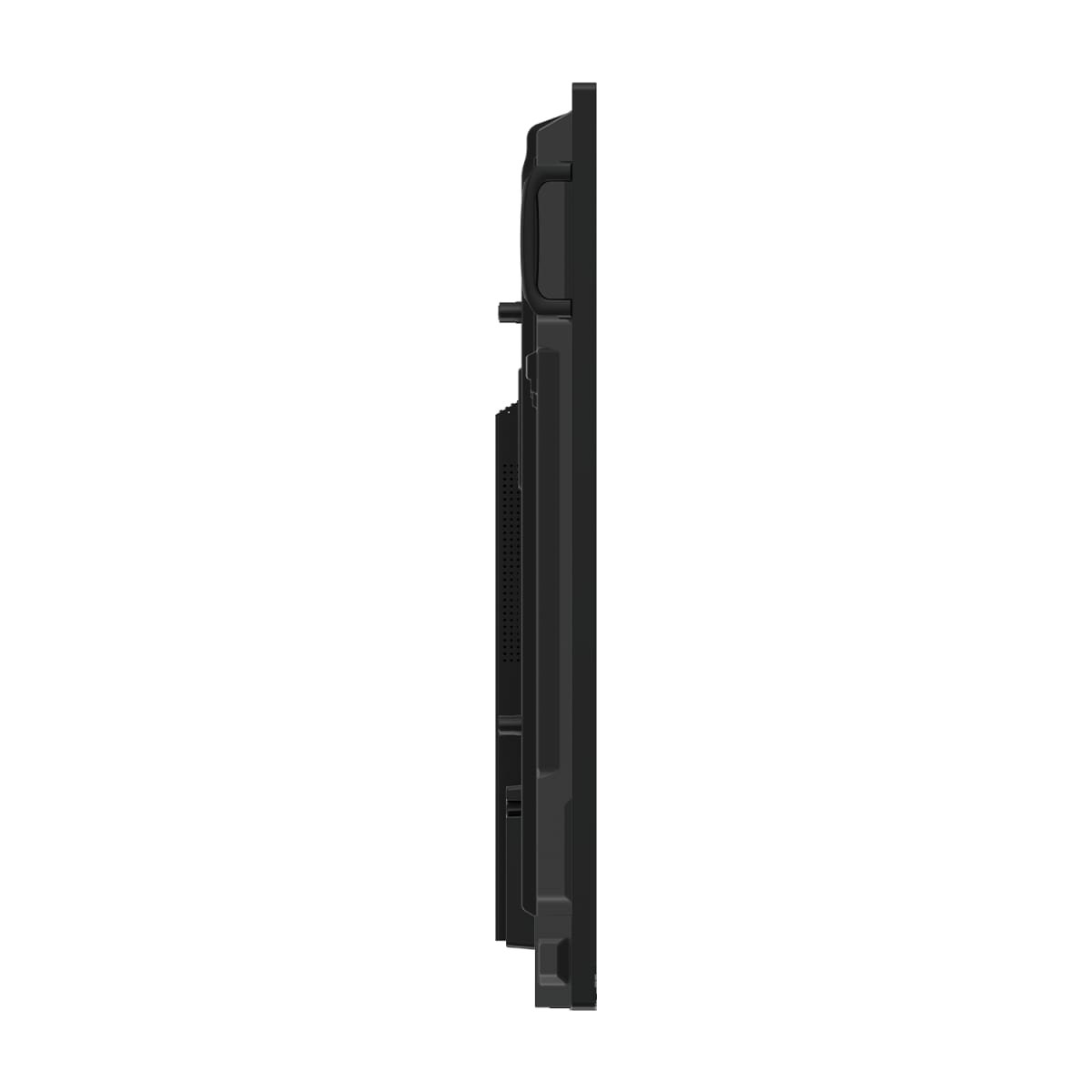
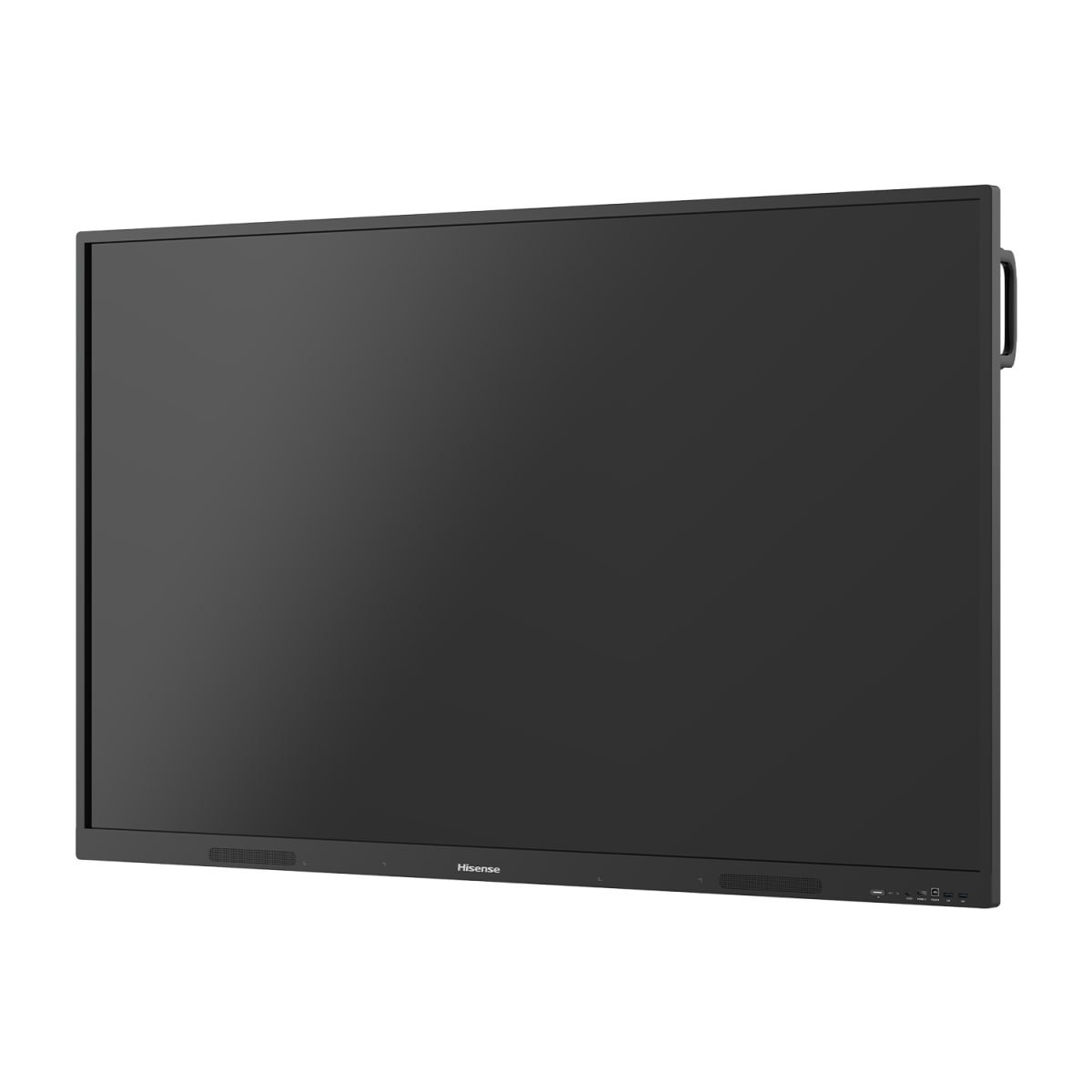
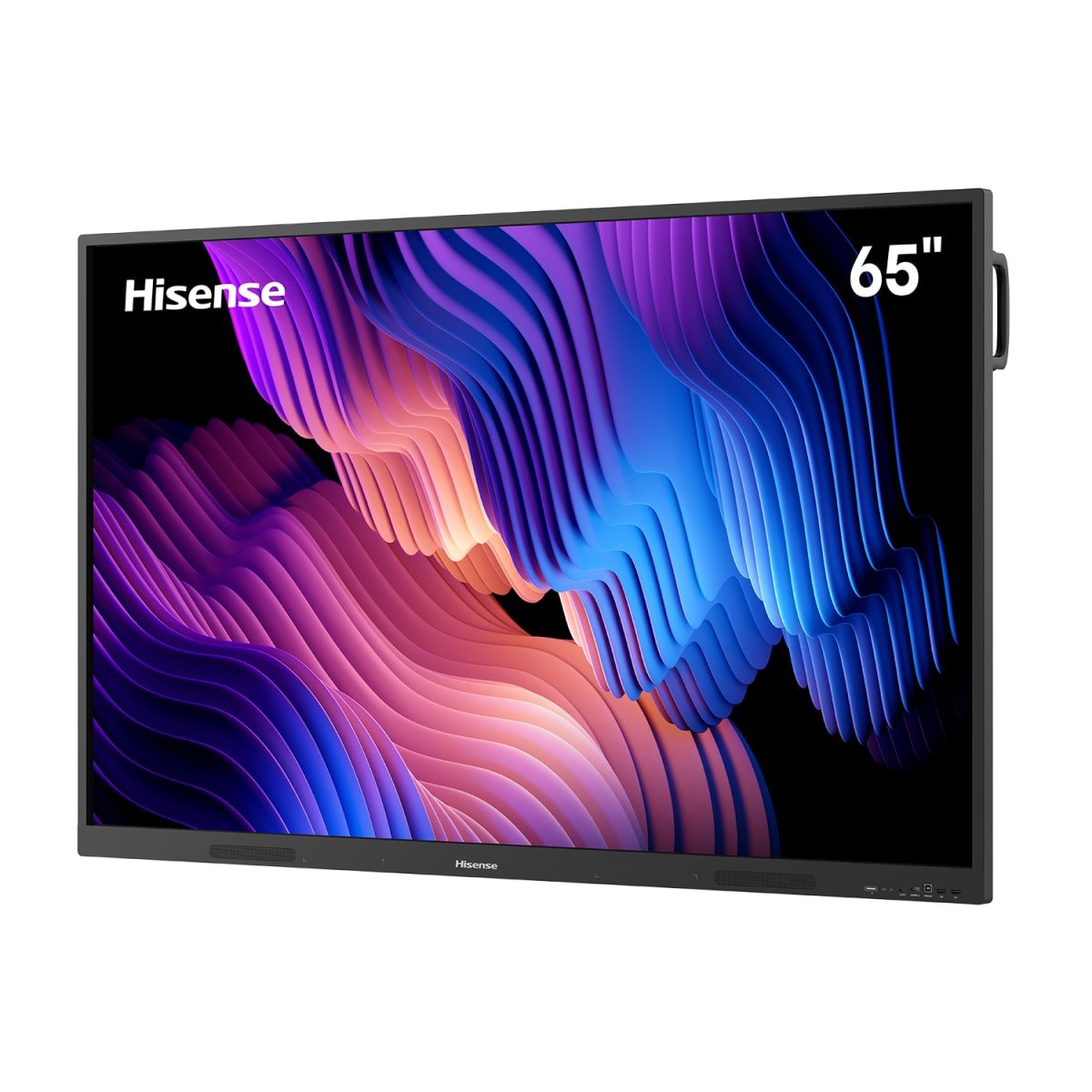
Interactive displays in education and corporate settings are evaluated differently to standard commercial screens. The WE3FE addresses the specific operational demands of these environments: multi-user simultaneous annotation, rapid content sharing across mixed-device classrooms and meeting rooms, platform compatibility with existing collaboration infrastructure, and all-day reliability in high-touch environments. This is an interactive collaboration display, not a presentation monitor.
Key Features
- 40-point simultaneous touch with low writing height: Multiple users annotate at the same time without latency delays or missed inputs. The 1.5mm writing height delivers a paper-like feel — operationally important because it reduces training time and encourages spontaneous classroom and meeting room use. Touch accuracy is within ±1.5mm, making handwriting-to-text conversion and formula editing reliable in practice.
- Android 14.0 with Google certification: The platform ensures out-of-box compatibility with Google Workspace, Meet, Classroom, and third-party collaboration apps without configuration workarounds. GMS certification means app store access and security updates are handled predictably — important for IT teams managing device fleets across multiple campuses or office locations.
- Pluggable WiFi module with dual-band operation: The swappable WiFi module isolates information security and allows field replacement without display downtime. Dual-band WiFi simultaneously supports a screen sharing hotspot and a network connection — operationally this means wireless casting from student devices, staff laptops, and meeting participants happens without dropping the management network connection.
- Intelligent whiteboard with handwriting recognition: Built-in smart whiteboard includes formula editor, mind mapping, shape libraries, and four-split screen display. Handwriting automatically converts to standard text — deployment-relevant because it simplifies classroom workflow and reduces setup complexity compared to external annotation software integration.
- Multi-protocol screen sharing (AirPlay, Miracast, Chromecast, Webcast): Teachers and meeting facilitators cast content from iPads, Android tablets, Windows laptops, and Chromebooks without installing proprietary software or managing connection profiles. Low latency and stable connection are critical in live teaching and presenting contexts where delays undermine credibility and momentum.
- 400-nit brightness with anti-glare surface: The combination of high brightness and anti-glare glass protects visibility in naturally lit classrooms and meeting rooms while reducing reflections and fingerprints. The 178° viewing angle ensures all students or meeting participants see consistent colour and contrast — important in tiered lecture halls and U-shaped meeting configurations.
- TÜV Rheinland blue light reduction: For schools and training facilities running extended classroom hours or corporate offices using the display throughout the day, reduced blue light minimizes eye fatigue and headaches among heavy users. This is a documented operational benefit in all-day teaching and collaboration environments.
- Energy Star 8.0 certification with 140W typical consumption: Significantly lower standby power (<0.5W) and typical running consumption compared to competing interactive displays — operationally relevant for schools and enterprises managing energy budgets across multiple displays and campuses.
Specifications
| Specification | Detail |
|---|---|
| Display Size | 65 inches |
| Panel Resolution | 3840 × 2160 (4K UHD) |
| Brightness | 400 nits (typical) |
| Contrast Ratio | 5000:1 (typical) |
| Viewing Angle | 178° horizontal and vertical |
| Operating System | Android 14.0 with Google certification |
| Processor | Quad-core Cortex-A73 @ 1.39 GHz maximum |
| Graphics | Mali-G52 MC1 |
| RAM | 8 GB |
| Storage | 128 GB internal |
| Touch Technology | Infrared touch frame, up to 40 simultaneous points |
| Touch Accuracy | ±1.5 mm (90% confidence) |
| Writing Height | 1.5 mm |
| Surface Protection | Anti-glare tempered glass |
| Colour Gamut | 72% NTSC |
| Panel Lifetime | 50,000 hours (typical) |
| Refresh Rate | 60 Hz |
| Response Time | 6.5 ms (typical) |
| Dimensions (W × H × D) | 1491 × 898.5 × 98.8 mm (58.7″ × 35.4″ × 3.9″) |
| Weight | 31.4 kg (69.2 lbs) |
| VESA Mount | 600 × 400 mm with M8 screws |
| Power Consumption (Typical) | 140 W |
| Power Consumption (Maximum) | 295 W |
| Standby Power | < 0.5 W |
| Power Input | AC 100–240 V, 50/60 Hz |
| Built-in Speakers | 2 × 16 W stereo |
| Certifications | Energy Star 8.0, TÜV Rheinland blue light reduction |
| Operating Temperature | 0–40°C |
| Operating Humidity | 20–80% RH (non-condensing) |
Connectivity
- HDMI inputs (3): 2.1 specification supports 4K60 from laptops, media players, and external signage controllers without content limitation.
- DisplayPort input (1): 1.2a — high-bandwidth option for workstations and meeting room PCs feeding 4K content directly.
- VGA input (1): Legacy support for older meeting room infrastructure and industrial PCs still common in some enterprise environments.
- USB 3.0 ports (3): Full-speed data transfer for external storage, document cameras, and peripheral devices during lessons or presentations.
- USB 2.0 ports (2): Standard connectivity for keyboards, mice, and lower-bandwidth peripherals.
- USB Type-C ports (2): One front-facing with 65W power delivery enables charging tablets or laptops; rear Type-C adds flexibility for docking stations.
- WiFi (dual-band 802.11ax): 2.4 GHz and 5 GHz simultaneous operation on separate pluggable modules — critical for classroom and meeting room environments with high device density.
- Bluetooth 5.2: Reliable wireless connection for collaborative input devices, remote controls, and audio peripherals.
- Ethernet (dual LAN ports): One input and one output at 1000 Base-T allows daisy-chaining displays or connecting to campus/office management networks without intermediate switches.
- Audio input (1): 3.5 mm jack for connecting external microphones or audio sources.
- Audio output (1): 3.5 mm jack plus S/PDIF for routing audio to external speaker systems or soundbars.
- HDMI output (1): Allows splitting the display output to a secondary monitor or recording device.
- RS-232 serial port (DB9): For integrating third-party control systems, classroom management software, or legacy AV automation.
- SD/TF card slot (1): Direct content loading from portable media without network dependency.
- OPS slot (1): Optional module slot supports dedicated compute, security appliances, or content management hardware.
For broader deployment options across education and corporate collaboration environments, see our Interactive Whiteboards collection.