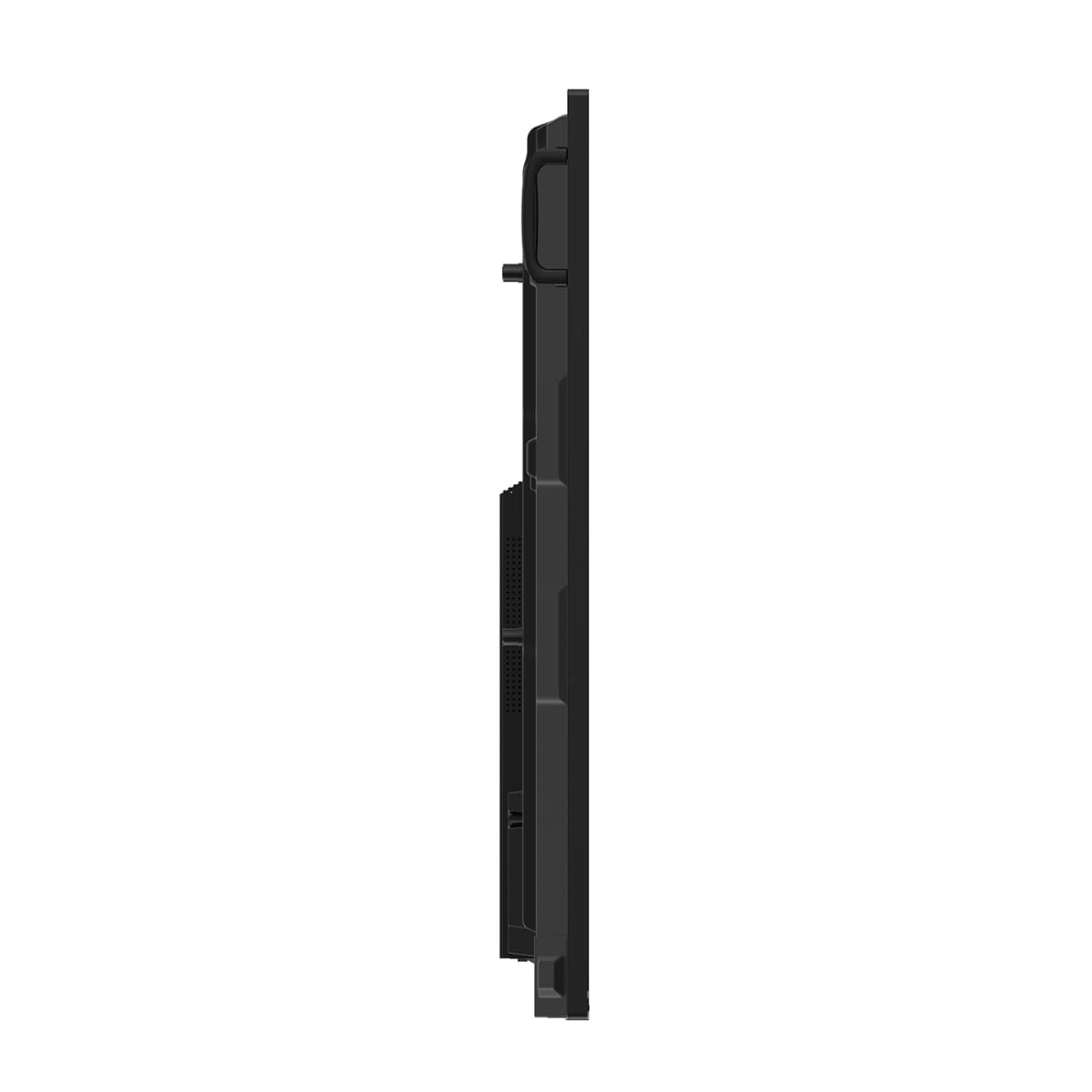
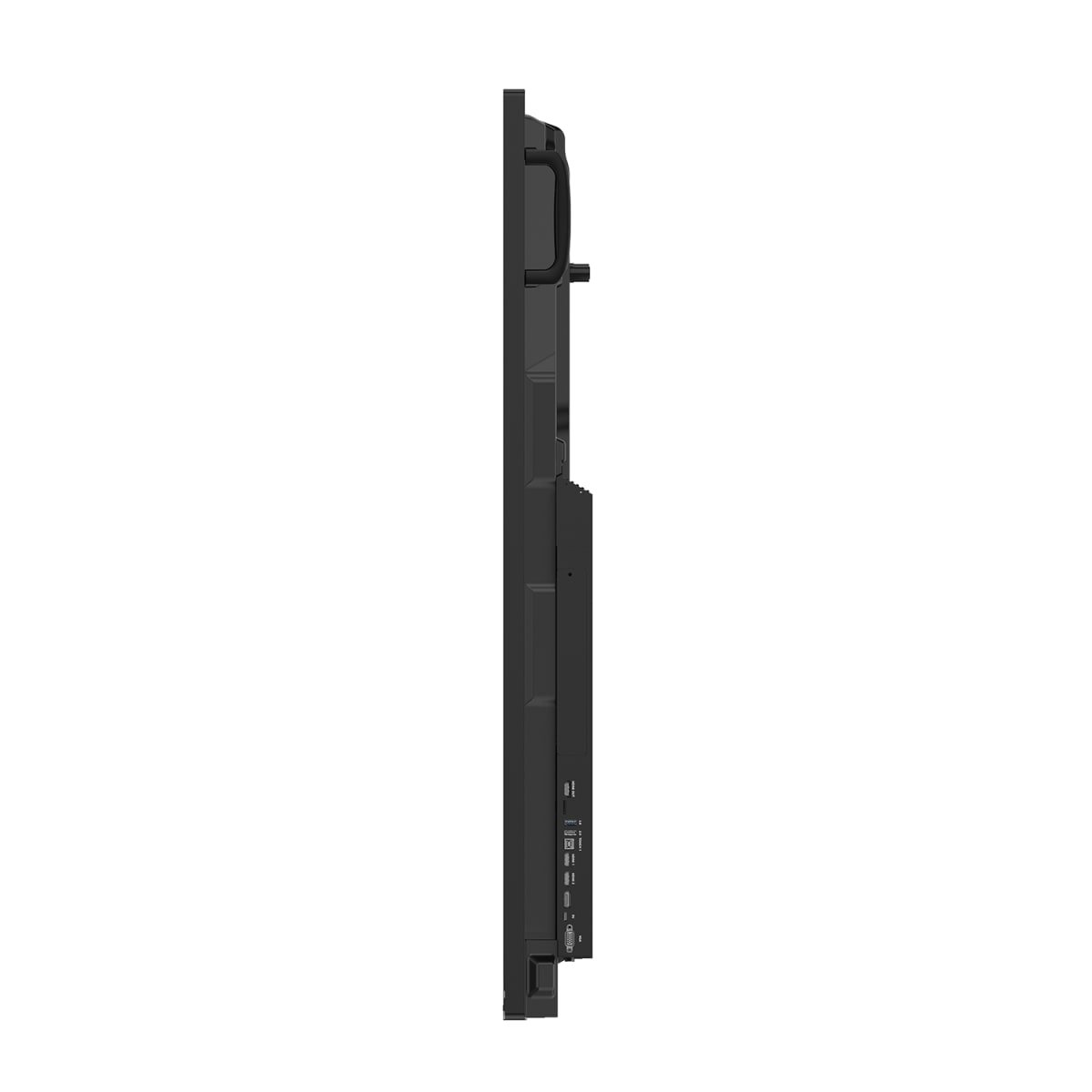


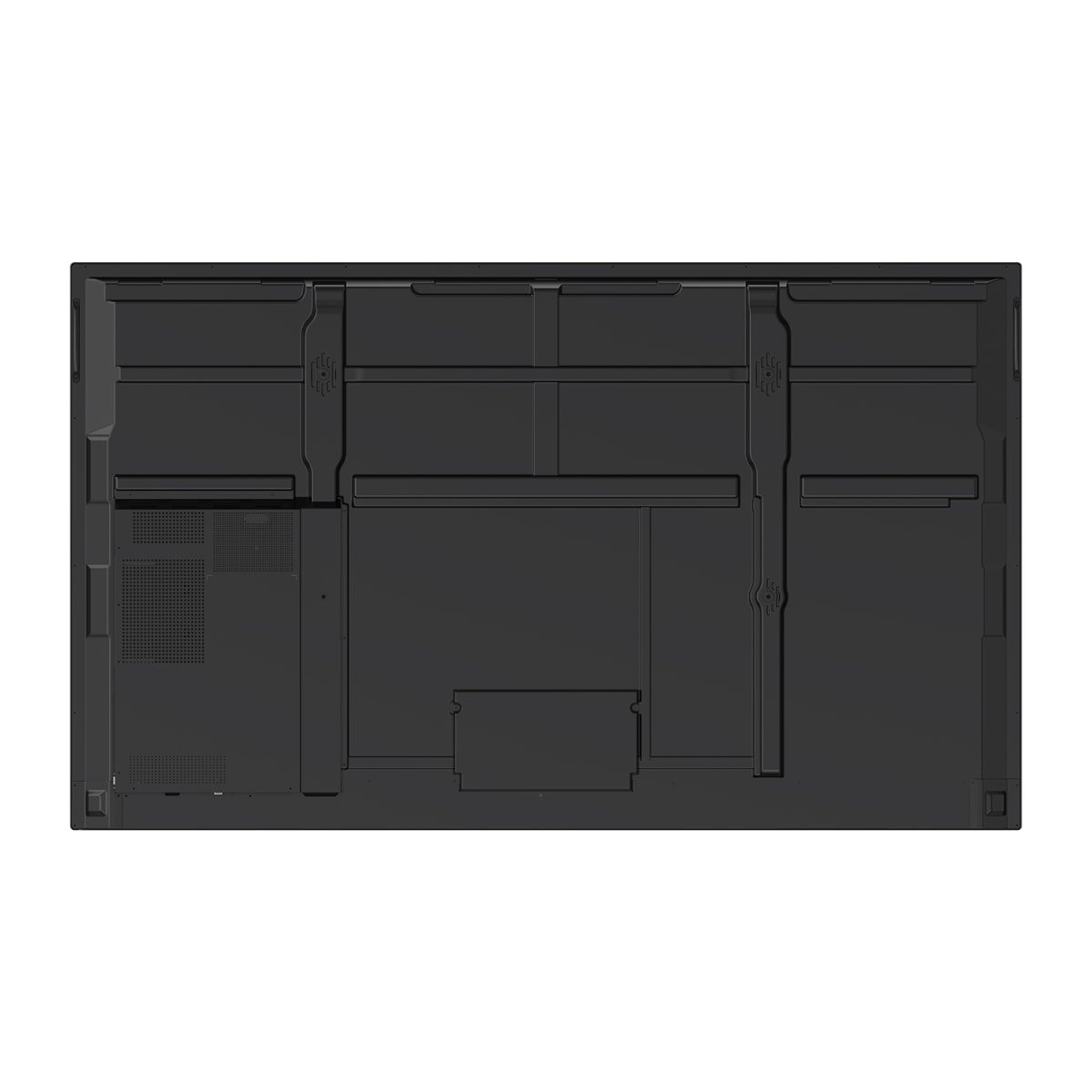

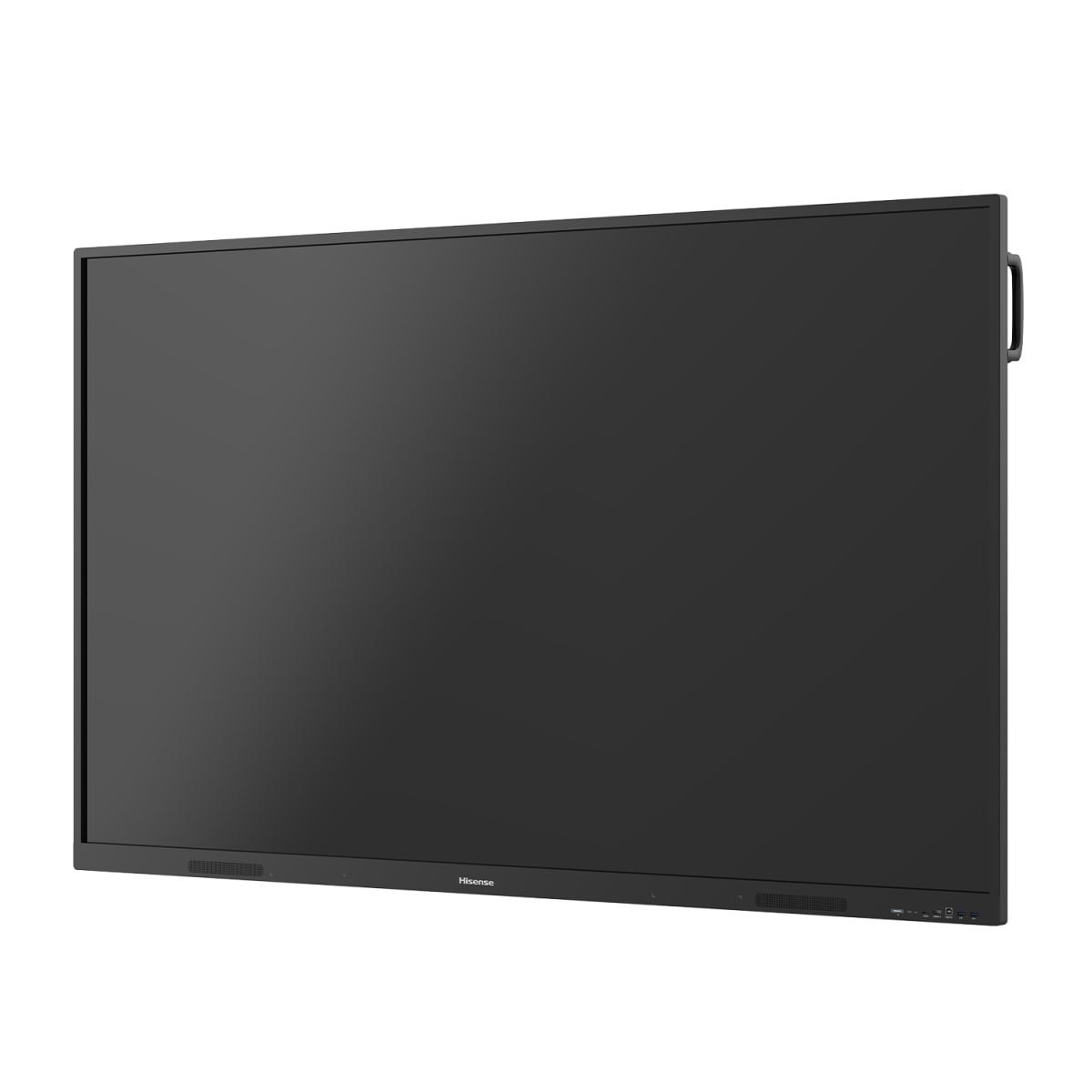
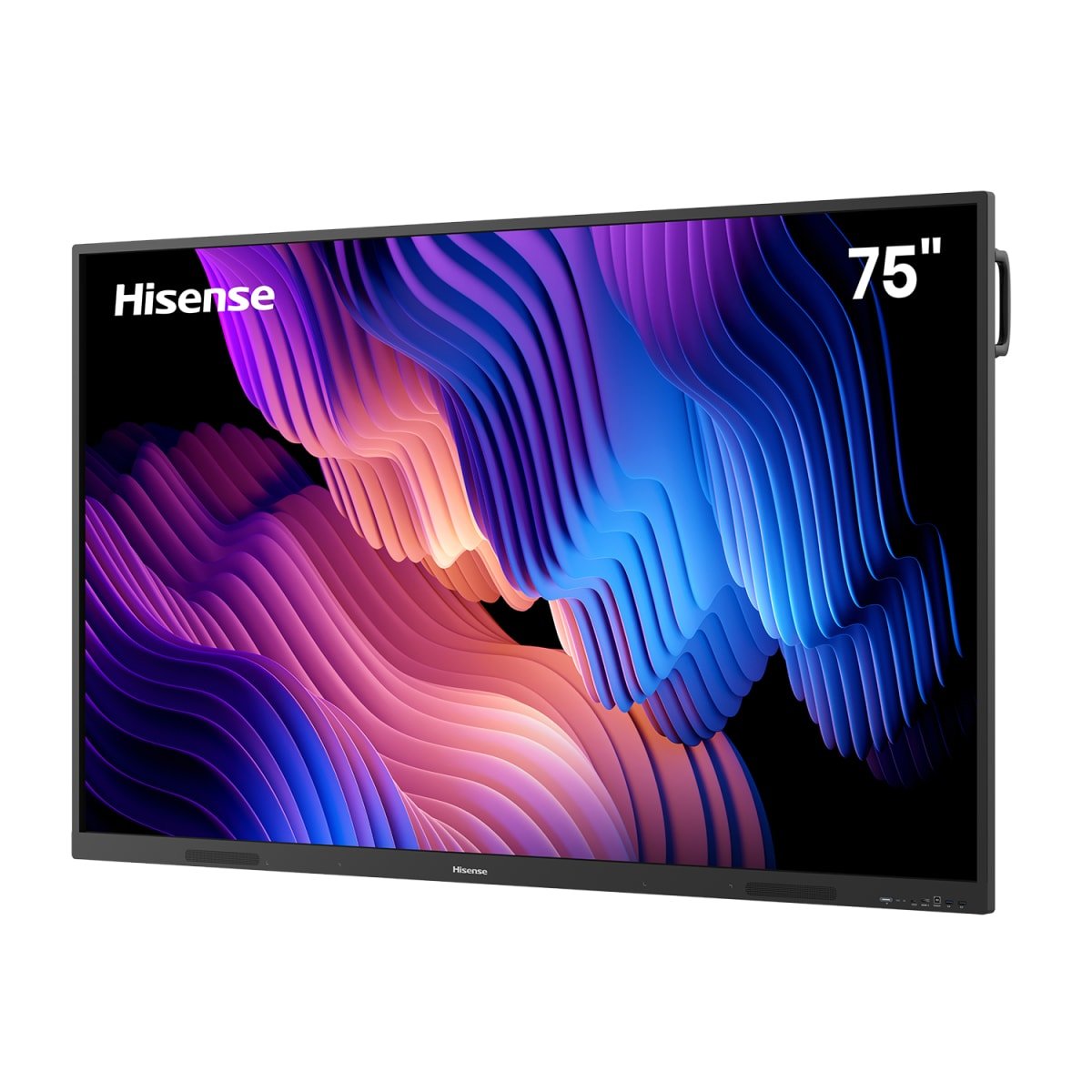
Interactive collaboration displays operate differently from standard commercial screens — touch responsiveness, multi-user interaction capability, and platform stability directly affect classroom engagement and meeting productivity. The 75WE3FE addresses this by combining Android 14 with high-precision infrared touch sensing, designed to perform reliably across full school days and back-to-back meeting schedules.
Key Features
- 40-point simultaneous touch and low writing latency: Multiple users can annotate at once without detection lag or false touches. The 1.5mm writing height and 6.5ms response time create a writing experience closer to paper than stylus — critical for active learning environments where real-time collaboration drives engagement.
- 400 nits brightness with anti-glare glass: Bright enough for natural daylight conditions in classrooms without curtains or dimming. The anti-glare surface reduces reflections and fingerprint visibility, which matters operationally in high-traffic spaces where the screen runs continuously and gets frequent touch.
- Android 14 with Google Mobile Services certification: Ensures stable app ecosystem compatibility and predictable performance across annotation software, video conferencing platforms, and learning management system integrations. Updates are more predictable than first-run Android implementations.
- Intelligent whiteboard with handwriting recognition: Converts handwritten notes to standard text, supports formula editing and mind mapping, and enables four-split screen layouts. Reduces setup time in training and teaching scenarios where content switching between tools slows down instruction.
- Dual WiFi modules with independent screen sharing hotspot: The display can broadcast its own wireless connection for devices while simultaneously connecting to network infrastructure. This setup means classroom or meeting room WiFi congestion doesn’t block content sharing — operationally significant when 20+ students or participants need to share simultaneously.
- Pluggable WiFi module with independent heat management: If the module fails, replacement is faster than standard fixed designs and doesn’t require full display downtime. The separate circuit design reduces wireless connectivity issues that plague some integrated designs.
- Multiple screen sharing protocols (AirPlay, Miracast, Chromecast, webcast): Removes dependency on single vendor ecosystems. Teachers and meeting facilitators can share from any device type without driver conflicts or per-device setup.
- TÜV Rheinland blue light reduction and 400-hour-plus daily operation rating: Extended viewing reduces eye strain and headaches for students and presenters in all-day deployment scenarios. Certification provides assurance for procurement teams evaluating eye safety claims.
- Energy Star 8.0 certification: Reduces operational power draw compared to unrated displays — measurable cost difference across 24/7 operation across multiple sites or school districts.
- 178° viewing angle across both axes: All students see consistent colour and brightness regardless of seat position. Critical in classroom deployments where seating is fixed and side-angle viewing is unavoidable.
Specifications
| Specification | Detail |
|---|---|
| Display Size | 75 inches (diagonal) |
| Resolution | 3840 x 2160 (4K UHD) |
| Brightness | 400 nits typical |
| Contrast Ratio | 5500:1 typical |
| Response Time | 6.5ms typical |
| Refresh Rate | 60Hz |
| Viewing Angle | 178° horizontal / 178° vertical |
| Panel Lifetime | 50,000 hours typical |
| Operating System | Android 14.0 |
| Processor | Quad-core Cortex-A73 @ 1.39GHz max |
| RAM | 8GB |
| Storage | 128GB ROM |
| Touch Technology | Infrared touch frame, up to 40 points simultaneous |
| Touch Accuracy | 90% (±1.5mm) |
| Writing Height | 1.5mm |
| Surface Protection | Anti-glare glass panel |
| Backlight | D-LED |
| Colour Gamut | 72% NTSC (10-bit colour) |
| Physical Dimensions (W×H×D) | 1712 × 1022 × 99mm (67.4 × 40.2 × 3.9 inches) |
| Net Weight | 41.8kg (92.2 lbs) |
| VESA Mount Pattern | 800 × 400mm, 4×M8 |
| Power Consumption (Max) | 330W |
| Power Consumption (Typical) | 175W |
| Standby Consumption | <0.5W |
| Operating Temperature | 0-40°C |
| Operating Humidity | 20% – 80% RH |
| Built-in Audio | 2 × 16W speakers |
| Certifications | Google Mobile Services (GMS), Energy Star 8.0, TÜV Rheinland blue light reduction |
Connectivity
- HDMI inputs (×3): 2.1 specification supports 4K60 and future bandwidth headroom. Three ports allow simultaneous connection of multiple content sources without constant cable swapping.
- DisplayPort input (×1): 1.2a supports high-resolution content from corporate laptops and AV control systems.
- USB 3.0 (×3): High-speed connectivity for content transfer, external storage, and peripheral devices.
- USB 2.0 (×2): Legacy compatibility for established classroom and meeting room peripheral infrastructure.
- USB-C (×2): Front-facing port supports 65W Power Delivery — chargers and content hubs with single-cable connectivity.
- VGA input (×1): Backward compatibility for older projector control systems and legacy hardware in established facilities.
- Gigabit Ethernet (LAN in/out, ×2): Network connectivity for content distribution and remote management across multiple displays in school or enterprise deployments.
- WiFi (802.11a/b/g/n/ac/ax): Dual-band 2.4GHz and 5GHz with support for both 802.11ax and legacy 802.11ac standard — ensures compatibility across older and newer devices on the same network.
- Bluetooth 5.2: Wireless connectivity for audio peripherals and remote device control.
- Audio input/output (×1 each): Line-level audio connectivity for external amplification or recording systems.
- S/PDIF output (×1): Digital audio output for integration with audio distribution systems.
- RS-232 serial connection (DB9): Integration with building management systems and legacy AV control infrastructure.
- Touch ports (×3): Support for external touch frame expansion or additional sensor input.
- OPS slot (optional): Accepts Windows or Android OPS modules for independent compute, extending the display lifecycle without full replacement.
- TF Card slot (×1): Local content storage and offline playback without network dependency.
The 75WE3FE integrates effectively into established education and enterprise AV ecosystems — explore deployment options and related products across our Interactive Whiteboards collection.